






Demonic possession has long blurred the boundary between psychological fracture and genuine supernatural infestation, remaining one of the most unsettling frontiers in the dark arts. While cinema offers flickering lights, levitating beds, and ancient Latin delivered in thunderous voices, the documented cases that inspired those films are far more austere — and far more disturbing. Stripped of Hollywood gloss, real demonic possession cases reveal ordinary lives quietly consumed by something that defies rational explanation.
These six accounts remain among the most thoroughly recorded and fiercely debated demonic possession cases in modern paranormal history. Each one blurred the line between faith, madness, and the possibility of something older and colder pressing against the veil. They are not entertainment; they are case files in the long, shadowed archive of human confrontation with the unknown.
Roland Doe and the Birth of The Exorcist


In 1949, a thirteen-year-old boy known publicly only as Roland Doe — later identified as Ronald Hunkeler — became the unwitting catalyst for one of horror cinema’s defining works. Shortly after the death of his spiritualist aunt, who had introduced him to the Ouija board, the family home in suburban Maryland descended into chaos. Furniture shifted without touch. Scratching sounds issued from within the walls. Most disturbingly, the boy’s mattress began to levitate and shake with violent force.
When medical and psychiatric explanations failed, the family turned to the Church. Jesuit priests in St. Louis conducted a series of exorcisms marked by trance states, guttural voices, and welts that appeared spontaneously on the boy’s flesh — at times spelling out the word “LOUIS.” In one documented session, Roland snapped a bedspring and slashed a priest across the shoulder. The rites culminated in April 1949 when the boy cried out that the entity had departed. The phenomena ceased. Ronald Hunkeler lived an unremarkable life thereafter, but the claustrophobic terror of that quiet St. Louis house lingers as one of the most influential demonic possession narratives of the twentieth century.
Anneliese Michel and the Tragedy of Emily Rose


Nowhere is the collision between extreme religious conviction and severe mental illness more harrowing than in the case of Anneliese Michel. A devout Catholic from Bavaria, she began suffering convulsions and hallucinations at sixteen. Diagnosed with temporal lobe epilepsy, she found no relief in medical treatment. Convinced she was possessed, Anneliese exhibited grotesque behaviors — consuming spiders, licking urine, barking like a dog — and claimed to be inhabited by six entities, including Lucifer, Judas Iscariot, and Adolf Hitler.


Over ten months, two priests performed sixty-seven exorcisms with the local bishop’s approval. The surviving audio recordings remain among the most disturbing artifacts in the genre. On July 1, 1976, Anneliese died of malnutrition and dehydration, weighing just sixty-six pounds. The subsequent trial resulted in negligent homicide convictions for the priests and her parents. It remains a bleak monument to the question of where faith ends and unchecked delusion begins.
Arne Cheyenne Johnson: The Devil Made Me Do It
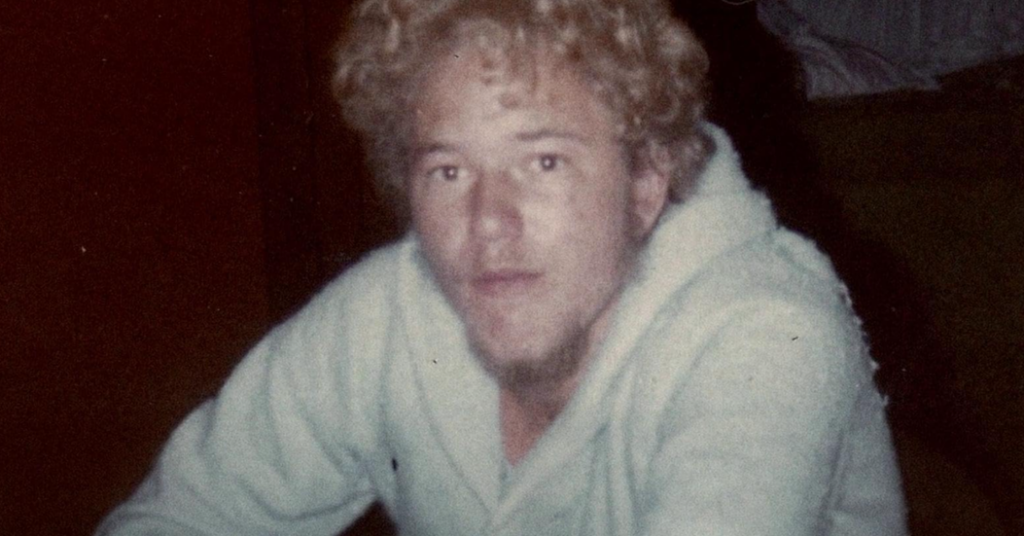

In 1981, Arne Cheyenne Johnson became the first defendant in United States history to mount a formal legal defense of demonic possession. The case began with his fiancée’s eleven-year-old brother, David Glatzel, who exhibited classic signs of oppression: growling, visions of a black-eyed old man, and invisible attacks. Ed and Lorraine Warren were brought in. During one intense exorcism, Johnson reportedly challenged the entity directly: “Take me on.” Witnesses described an immediate transfer. Johnson began slipping into trance states and, on February 16, 1981, stabbed his landlord Alan Bono to death in a dissociative rage.
The defense was swiftly ruled inadmissible. Johnson was convicted of first-degree manslaughter. The case endures as a singular courtroom collision between demonic possession and the rational — one that still divides believers and skeptics decades later.
Anna Ecklund and the Earling Exorcism
The 1928 exorcism of Anna Ecklund (née Emma Schmidt) reads like a gothic manuscript. Raised in a devout Midwest Catholic community, she developed a violent aversion to sacred objects and could not enter a church without collapsing. Church investigators concluded she had been cursed by her own father and an aunt suspected of witchcraft. At a Franciscan convent in Earling, Iowa, Father Theophilus Riesinger led a prolonged rite.
Witnesses reported levitation, superhuman strength, grotesque swelling of the body, and vomiting of foreign debris. The entities identified themselves as Judas Iscariot and others tied to her family’s sins. After three grueling sessions spanning weeks, the infestation was declared lifted. Emma Schmidt lived quietly until her death in 1941. The Earling case remains one of the most meticulously documented demonic possession cases on record.
Michael Taylor and the Ossett Horror
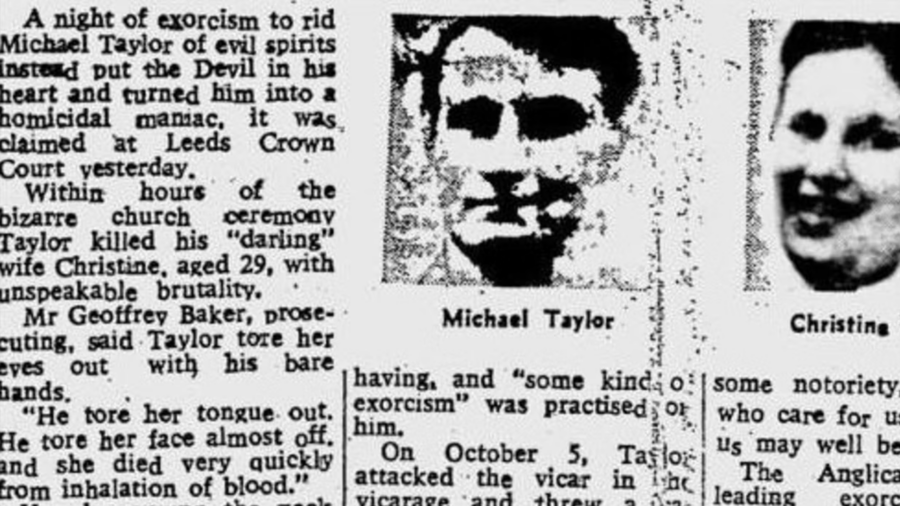

In 1974, Michael Taylor — a mild-mannered butcher from Ossett, West Yorkshire — descended into religious fanaticism after joining a local Christian fellowship. Following a violent outburst, two ministers performed an all-night exorcism, claiming to cast out forty demons. They warned that three remained: insanity, violence, and murder.
Hours later, Taylor was found wandering the streets naked and blood-soaked, screaming that the blood was Satan’s. Inside his home, police discovered his wife Christine murdered with unthinkable brutality — eyes and tongue torn out by hand — and the family dog strangled. Acquitted of murder by reason of insanity, Taylor’s case stands as a chilling illustration of the dangers when religious fervor meets an already fragile psyche.
Maricica Irina Cornici and the Tanacu Crucifixion
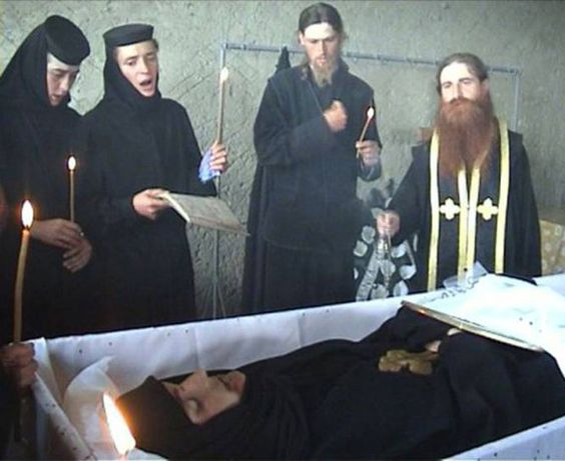

Even in the twenty-first century the rite has not lost its capacity for tragedy. In 2005, twenty-three-year-old nun Maricica Irina Cornici began uncontrollable giggling during Mass at the Holy Trinity convent in Tanacu, Romania. Diagnosed with schizophrenia and briefly hospitalized, she was returned to the convent where Father Daniel Petre Corogeanu declared her possessed. Bound, gagged, and chained to a wooden cross, she was subjected to a three-day exorcism without food or water. She died of dehydration and suffocation.
The case provoked international outrage, led to the monastery’s closure, and resulted in murder convictions for the priest and nuns. It remains a stark reminder that medieval practices can still claim lives in the modern era.
Demonic Possession: The Enduring Shadow
These six demonic possession cases do not offer easy answers. They exist in the uneasy space where documented evidence meets the limits of human understanding — part clinical record, part spiritual testimony, part unresolved tragedy. Whether one sees genuine demonic possession or profound psychological collapse, the cultural and emotional weight is undeniable. They continue to haunt not only the pages of exorcism literature but the darker corners of our collective imagination, reminding us that the most disturbing monsters rarely announce themselves with green vomit or spinning heads. Sometimes they arrive quietly, behind the closed doors of ordinary homes, and refuse to leave.


