

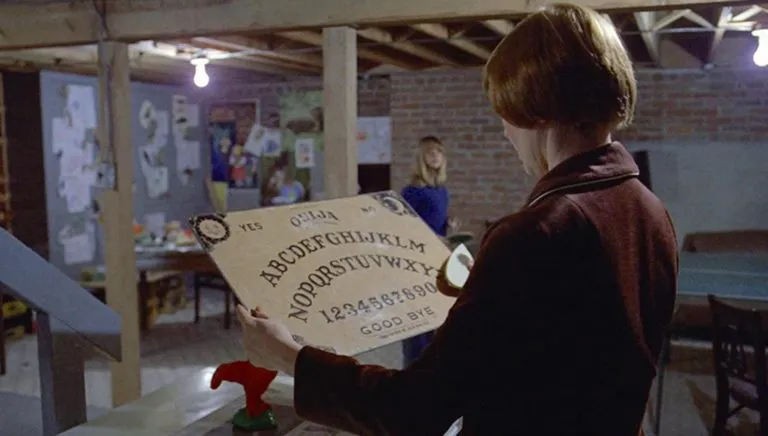
The Ouija Board has occupied a singular and uneasy place in the modern imagination for more than a century. Part parlor game, part purported conduit to the unseen, it remains one of the most recognizable instruments in the history of spirit communication. With its alphabet array, numerals, and the stark affirmations “yes,” “no,” and “goodbye,” paired with the gliding planchette, the board still inspires both fascination and caution.
To trace its story is to follow a thread that binds ancient divinatory practices to the spiritualist fervor of the nineteenth century, then onward through war, grief, popular culture, and ongoing controversy. Its history lives not only in patents and sales figures but in the quieter spaces where belief and skepticism have long collided.
Roots in Automatic Writing and the Rise of Spiritualism
The conceptual lineage of the Ouija Board stretches back far beyond its commercial birth. Automatic writing — the act of producing text without conscious intent, ostensibly guided by external intelligence — appears in records as early as the Tang Dynasty in China (618–907 AD). Practitioners entered trance states to receive messages from the spirit realm. Similar techniques surfaced across cultures, though no surviving artifact from the intervening centuries exactly matches the board-and-planchette format we recognize today.
The modern device crystallized during the spiritualist movement that swept the United States and Europe in the mid-to-late nineteenth century. The 1848 Hydesville rappings of the Fox sisters in New York sparked the movement. Spiritualism offered bereaved families a direct line to the departed at a time when science and industrialization eroded traditional religious certainties. By the 1890s, millions had embraced the possibility that the veil between worlds could be parted through mediumship.
The Commercial Birth of the Talking Board
In 1891, attorney Elijah Bond and entrepreneur Charles Kennard secured the first patent for what they named the Ouija Board. They marketed it initially as family entertainment rather than an occult tool. The flat board featured the full alphabet, numerals 0–9, and the words “yes,” “no,” and “goodbye.” A heart-shaped planchette, guided by the sitters’ fingertips, supposedly spelled out responses from beyond.
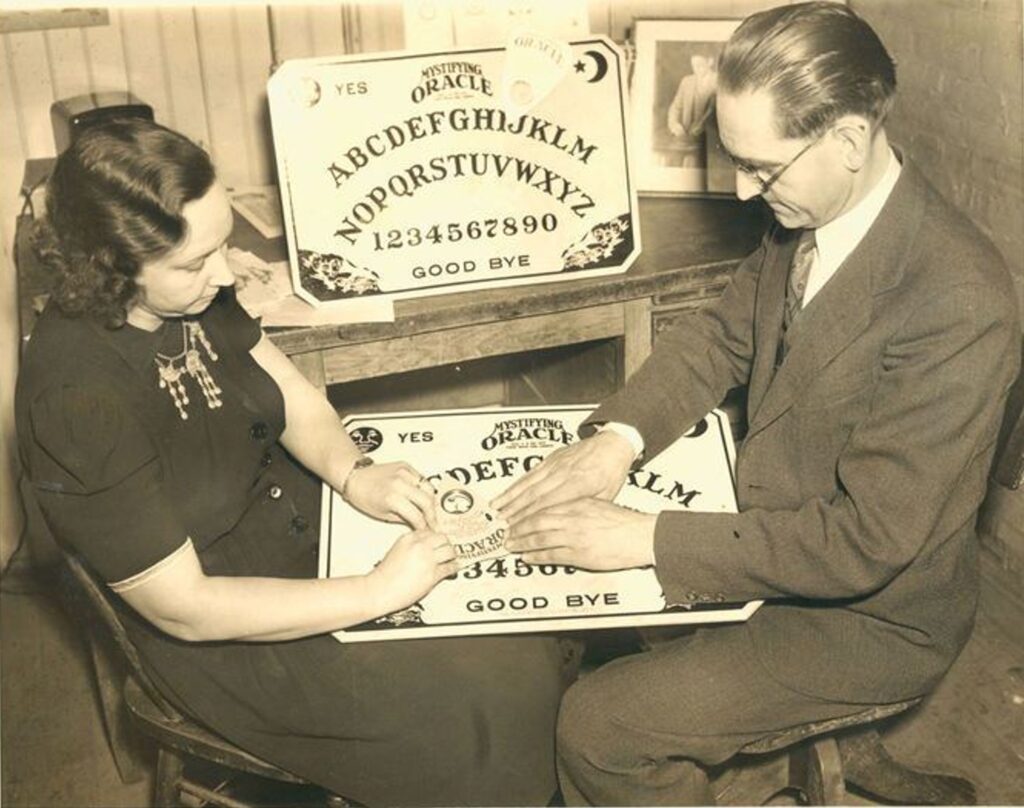
The Kennard Novelty Company, incorporated on the eve of Halloween, began production in Baltimore. The timing fed the era’s growing fascination with the macabre. Within a few years, the board passed into the hands of William Fuld, the man most responsible for its popularization and often called the “father of the Ouija Board.” Fuld refined the design, introduced the iconic three-bar crest, and oversaw production of the “Mystifying Oracle” line that dominated the market for decades. His boards — many now prized collector’s items — transformed a novelty into a cultural fixture. When Parker Brothers acquired the rights in the late 1930s, the Ouija Board’s place in American households was already secure.
The Shadow of War and Collective Grief
The Ouija Board experienced its greatest surge in popularity during and after World War I. The conflict claimed nearly sixteen million lives and left millions in mourning. Bereaved families turned to spiritualism in search of solace. The board offered something concrete in an age of unbearable absence: a simple domestic ritual through which the living might reach the dead. Its accessibility — no medium required, no specialized training — made it a quiet companion to grief across dining tables and drawing rooms.
The Ouija Board in Popular Culture
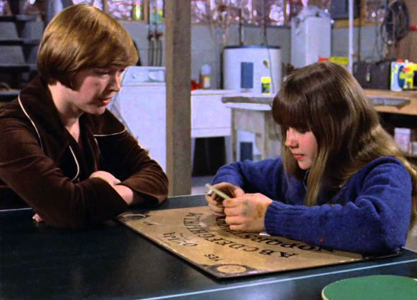
Cinema sealed the board’s darker reputation. William Friedkin’s 1973 masterpiece The Exorcist showed a young girl using the Ouija Board to contact an entity far more malevolent than she anticipated. The film transformed the board in the public mind from harmless parlor diversion into a recognized vector for demonic possession. Subsequent appearances in literature (Middlesex), television (Supernatural, Friends), and countless horror films only deepened the association. Surveys have shown that nearly eighty percent of respondents view its cinematic portrayals as overwhelmingly negative.
Controversies and Criticisms
Religious authorities, particularly within Christianity, have long warned against the Ouija Board. They view it as an invitation to forces outside divine protection. Skeptics counter with the ideomotor effect — unconscious muscular movements that can guide the planchette without any supernatural agency. Scientific explanations have done little to quell the unease surrounding documented cases in which the board has been linked to psychological distress or claims of possession.
Even within paranormal investigation the board remains divisive. Some seasoned researchers, including Zak Bagans, have employed it as a deliberate provocation tool. Others refuse it outright, arguing that it can attract or escalate activity in unpredictable ways.
The Enduring Enigma
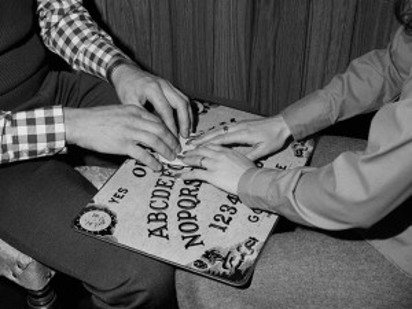
More than a century after its patent, the Ouija Board endures not because it has been proven or disproven, but because it continues to embody humanity’s oldest tension. People still feel the desire to know what lies beyond the threshold and the instinctive fear of what might answer. Whether regarded as a toy, a psychological curiosity, or a genuine instrument of spirit communication, the board remains a quiet fixture in the darker corners of popular culture and private ritual alike.
Its history is not merely one of patents and sales. It is a chronicle of grief, curiosity, faith, and the persistent human impulse to speak across the divide. In that sense, the Ouija Board has never really been just a board. It is a mirror — one that reflects back whatever we bring to it, for better or for worse.